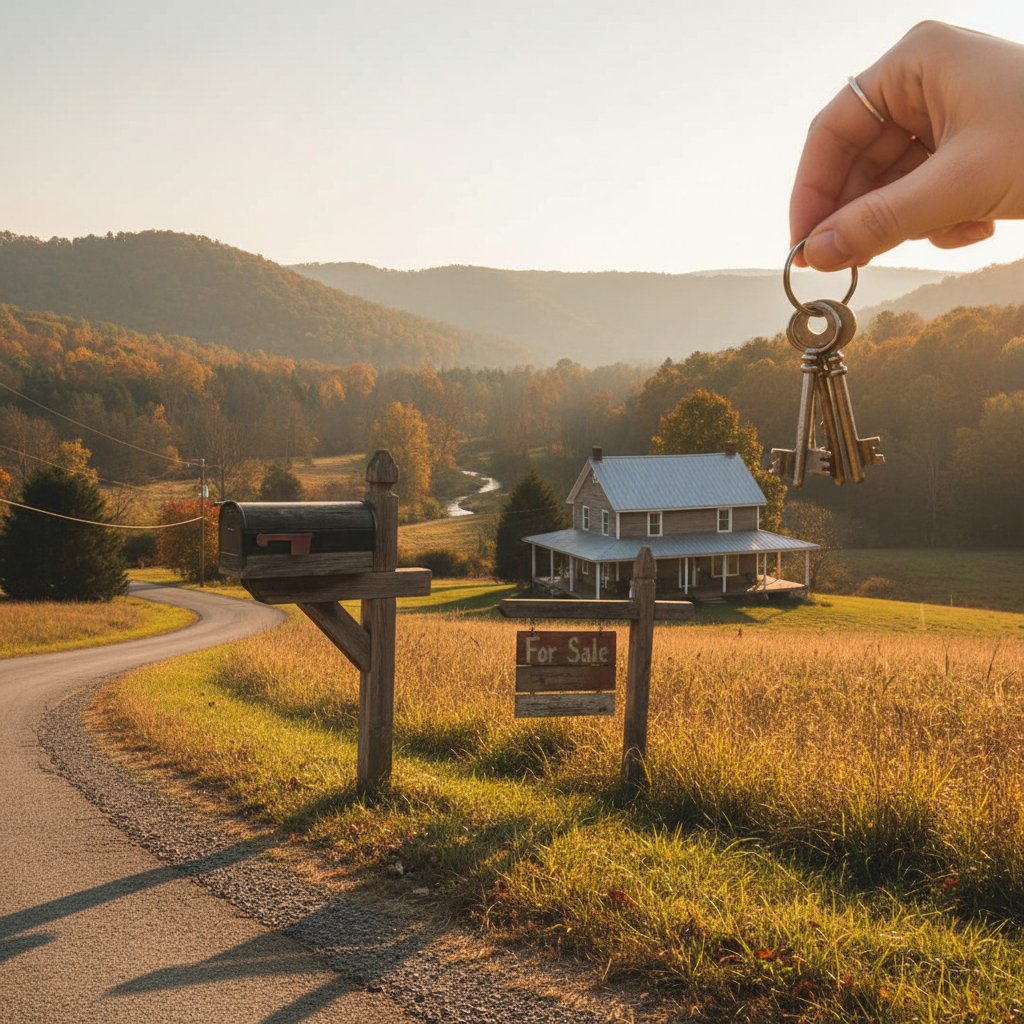
If you’re researching a move to Fentress County or Jamestown, Tennessee, you’ve probably heard the phrase “no state income tax” thrown around like it’s Tennessee’s secret superpower. But here’s the thing: understanding how that tax advantage actually impacts your homebuying power and long-term financial picture is the real game-changer. Let’s break down what this means for your wallet and your ability to afford a home in the Upper Cumberland.
The Tennessee Tax Advantage: More Than Just a Talking Point
Tennessee is one of only nine states with no state income tax. That means when you earn $50,000, $100,000, or $200,000 a year—you keep it all. No state income tax withholding, no state tax return to file. Compare that to states like California (up to 13.3%), New York (up to 6.85%), or Florida’s neighbor Georgia (up to 5.75%), and the difference compounds year after year.
For someone relocating from a high-tax state and earning the same salary remotely, this isn’t theoretical money—it’s real dollars that can go directly toward your down payment, your mortgage, or building equity in a rural Tennessee home.
What This Means for Your Home-Buying Power
Let’s get specific. A family earning $120,000 annually in California might pay roughly $5,000–$7,000 in state income tax each year. That same family in Tennessee? Zero state income tax. Over five years, that’s $25,000–$35,000 in your pocket.
Here’s where it matters for homebuyers:
- Larger down payment: That tax savings accumulates into a bigger down payment fund, which means lower mortgage payments and less interest paid over 30 years.
- Better loan terms: A larger down payment (even an extra $5,000–$10,000) can improve your debt-to-income ratio and qualify you for better interest rates.
- More homes in reach: In Fentress County, a $250,000 home that might stretch your budget in a high-tax state becomes genuinely affordable when you’re not hemorrhaging money to state income tax.
Curious about how much home your current budget actually buys in our market? Use the Fentress County Rent vs. Buy Calculator to compare your monthly costs—and see how eliminating state income tax changes your financial picture.
Tennessee’s Property Tax Reality: The Catch You Need to Know
Here’s the honest part: Tennessee doesn’t have state income tax, but it does tax property. Fentress County’s property tax rate is approximately 0.71% of assessed value—which is below the national average of 0.84%, and significantly lower than high-tax states.
Translation: A $200,000 home in Jamestown costs roughly $1,420 per year in property tax—or about $118 per month. Many homebuyers coming from California, New York, or the Northeast are shocked by how reasonable this is.
What About Other Taxes in Tennessee?
Tennessee does have a 9.55% sales tax (one of the highest in the nation), but here’s the nuance: groceries, medications, and many essentials are exempt. If you’re buying a home and settling into rural life, your day-to-day spending will be lower than in a city, which naturally offsets the sales tax impact.
Real Numbers: What $150K–$300K Buys You Here
The income tax advantage hits differently when you see what your money actually buys:
- $150,000: A solid 3-bed, 1.5-bath home on a quarter-acre in Jamestown proper, or a newer modular home on 1–2 acres outside town.
- $200,000: A well-maintained farmhouse on 5+ acres, or a move-in-ready ranch home with land near Clarkrange or Allardt.
- $250,000: A quality home on 10+ acres with potential for horses, gardens, or future development.
- $300,000: A luxury rural property—think newer construction, outbuildings, premium acreage, or a home with views near Dale Hollow Lake.
In most other states, these same budgets buy you a condo or a suburban lot. Here, you get land, space, and lifestyle.
The Long-Term Wealth-Building Picture
Over 30 years of homeownership, the compounding effect of no state income tax is staggering. A couple earning $150,000 combined saves roughly $7,500–$10,000 annually in Tennessee (compared to high-tax states). Reinvest that into extra mortgage payments, and you’re building equity faster while keeping more of your paycheck.
That’s how remote workers, retirees, and families from out-of-state are building real wealth in the Upper Cumberland—not by getting lucky, but by understanding the financial architecture of rural Tennessee.
Next Steps: Know Your Full Financial Picture
The no-state-income-tax advantage is real, but it only matters if you understand your total homebuying picture. Property tax, insurance, maintenance, septic/well costs (if buying land), and your actual mortgage—these all matter.
Ready to see what you can afford in Fentress County? Talk to Tim and Lori Denehy at Mitchell Real Estate. They know every dollar stretch in our market and can help you navigate the financial side of moving to Jamestown. Visit DeneyhHomes.com or call 702-569-9557 to get started. Your next chapter in Tennessee is waiting—and your budget can stretch further than you think.