Is Clarkrange TN Right for Your Homestead? A Buyer’s Guide to Fentress County’s Hidden Gem
If you’re searching for a place where small-town charm meets genuine rural opportunity, Clarkrange, Tennessee might be the answer you’ve been looking for. Nestled in the heart of Fentress County, this quiet community offers something increasingly rare in today’s real estate market: affordable land, close-knit neighbors, and room to build the life you’ve imagined—without the noise and expense of urban sprawl. Whether you’re a first-time homebuyer, a relocating professional seeking remote work flexibility, or someone dreaming of acreage and self-sufficiency, Clarkrange deserves a serious look. Here’s what you need to know before you make your move. Why Clarkrange Stands Out in Fentress County Clarkrange sits in a sweet spot on the Upper Cumberland Plateau. You’re close enough to Jamestown for essentials and services, yet far enough removed to enjoy genuine peace and privacy. The area is known for its rolling hills, mature timber, and properties ranging from modest homes on smaller lots to expansive acreage perfect for homesteading. What really sets Clarkrange apart is affordability paired with land availability. In a region where unrestricted land is still attainable—and where you won’t compete with Nashville developers—you can actually own property with room to breathe. Many properties come with well and septic already in place, meaning you’re not starting from zero if you’re building or expanding. Land and Lifestyle Appeal Unrestricted Properties: Build what you want, raise animals, or develop your vision without HOA restrictions or excessive zoning limitations. Timber and Natural Resources: Many parcels include mature timber, providing both aesthetic value and potential income. Privacy Without Isolation: You’re genuinely rural, but not cut off. Emergency services are responsive, and the community is tight-knit without being intrusive. Big South Fork Proximity: Outdoor recreation, hiking, and scenic beauty are minutes away. Learn more about the region at gofentress.com. Practical Considerations for Clarkrange Homebuyers Internet Connectivity If you’re a remote worker, this is crucial. Twin Lakes Fiber serves much of Clarkrange and surrounding areas, delivering reliable broadband that rivals urban speeds. Before you make an offer, confirm that fiber service reaches your specific property or is within extension distance. It’s a game-changer for anyone working from home. Well and Septic Systems Most Clarkrange properties rely on private wells and septic systems. This is normal for rural Tennessee and rarely a dealbreaker, but it does require understanding: Perc tests ensure your soil can safely handle a septic system. Well water quality should be tested before purchase. Maintenance is your responsibility—factor in annual pumping and inspections. Our team at Team Denehy – Mitchell Real Estate can connect you with local contractors who understand Plateau soil and drainage patterns. Road Access and Deed Clarity Verify that your property has legal road access and that all deeds are clear. On the Plateau, older properties sometimes have complicated titles or shared driveways. We always conduct thorough title searches to protect your investment. Is Clarkrange Right for You? Ask yourself: Are you drawn to slower living? Do you want land without land taxes crushing your budget? Can you embrace well water and septic living? Are you excited about building or renovating rather than buying cookie-cutter? If you’re nodding yes, Clarkrange is calling. The right Fentress County property can change your life—and it’s still possible to find it at a price that makes sense. Contact Tim Denehy today at 702-569-9557 or visit denehyhomes.com to explore Clarkrange listings and learn more about building your dream homestead on the Plateau. For a deeper dive into what makes this region special, check out gofentress.com and start planning your move to a place where community, land, and opportunity still go hand in hand.
“5 First-Time Buyer Mistakes to Avoid When Buying in Fentress County, Tennessee”
Buying your first home is one of the biggest financial decisions you’ll ever make—and when you’re considering a move to rural Tennessee, the stakes feel even higher. The good news? The Fentress County and Jamestown area offers incredible value and lifestyle benefits that urban markets simply can’t match. But first-time buyers often stumble on the basics before they even start house hunting. Let’s talk about five critical mistakes that could cost you thousands, and how to avoid them. Mistake #1: Skipping the Pre-Approval Process Too many first-time buyers fall in love with a property before knowing what they can actually afford. Pre-approval isn’t just a formality—it’s your financial roadmap. When you get pre-approved, a lender verifies your income, credit, and debt, giving you a realistic budget and a competitive edge in offers. In Fentress County’s growing market, sellers notice pre-approved buyers first. What to do: Contact a lender before you start touring properties. You’ll know your exact price range and can move quickly when the right place appears. Mistake #2: Underestimating Tennessee Closing Costs Tennessee’s closing costs typically run 2–5% of your purchase price. Many first-time buyers budget only for the down payment and are shocked when closing day arrives. Here’s what you need to know: Title insurance: Required by lenders; protects you against ownership disputes. Property taxes: Tennessee has no state income tax, but property taxes vary by county. Fentress County’s rates are among Tennessee’s most affordable. Appraisal and inspection fees: Typically $400–$800 combined. Attorney fees: Tennessee requires an attorney for real estate closings—budget $300–$600. HOA fees: Not applicable in most rural Fentress County properties, saving you money long-term. Work with a lender who can provide a Loan Estimate upfront so there are no surprises. Mistake #3: Ignoring Your Credit Score Your credit score determines your interest rate. A score of 620 gets you approved but costs thousands more in interest over 30 years compared to a 750+ score. Many first-time buyers don’t realize how much their credit affects affordability. Pro tip: Pull your free credit report from annualcreditreport.com before applying for a mortgage. If your score needs work, spending 3–6 months improving it can save you significantly. Mistake #4: Not Budgeting for Rural-Specific Costs Fentress County properties often sit on acres of land—which is beautiful, but different from suburban living. Factor in: Well maintenance and potential water testing. Septic system inspections (essential before closing). Gravel driveway upkeep and road maintenance agreements. Internet infrastructure—though Twin Lakes Fiber now brings high-speed connectivity to much of the area, eliminating this traditional rural drawback. Mistake #5: Rushing the Inspection and Appraisal These aren’t rubber-stamp formalities. A thorough home inspection reveals foundation issues, roof condition, HVAC health, and septic functionality. The appraisal protects your lender (and you) by ensuring the property’s value matches the sale price. On the Plateau, where properties can be older or sit on variable acreage, inspections are non-negotiable. Ready to Buy Smart in Fentress County? The path to homeownership in Jamestown and Fentress County is straightforward when you avoid these common pitfalls. Tim and Lori Denehy have guided hundreds of first-time buyers through the process, and they know exactly how to help you navigate Tennessee’s specific requirements and the unique aspects of rural Plateau living. Don’t buy blind. Get pre-approved, understand your closing costs, and work with a team that knows this market inside and out. Visit denehyhomes.com/for-buyers/ to learn more, or call Tim Denehy at 702-569-9557 for a no-pressure conversation about your first home in Fentress County. Learn more about the Fentress County area at gofentress.com/—your guide to everything our community has to offer.
Is Pall Mall Tennessee Right for Your Homestead? A First-Timer’s Guide to Fentress County Living
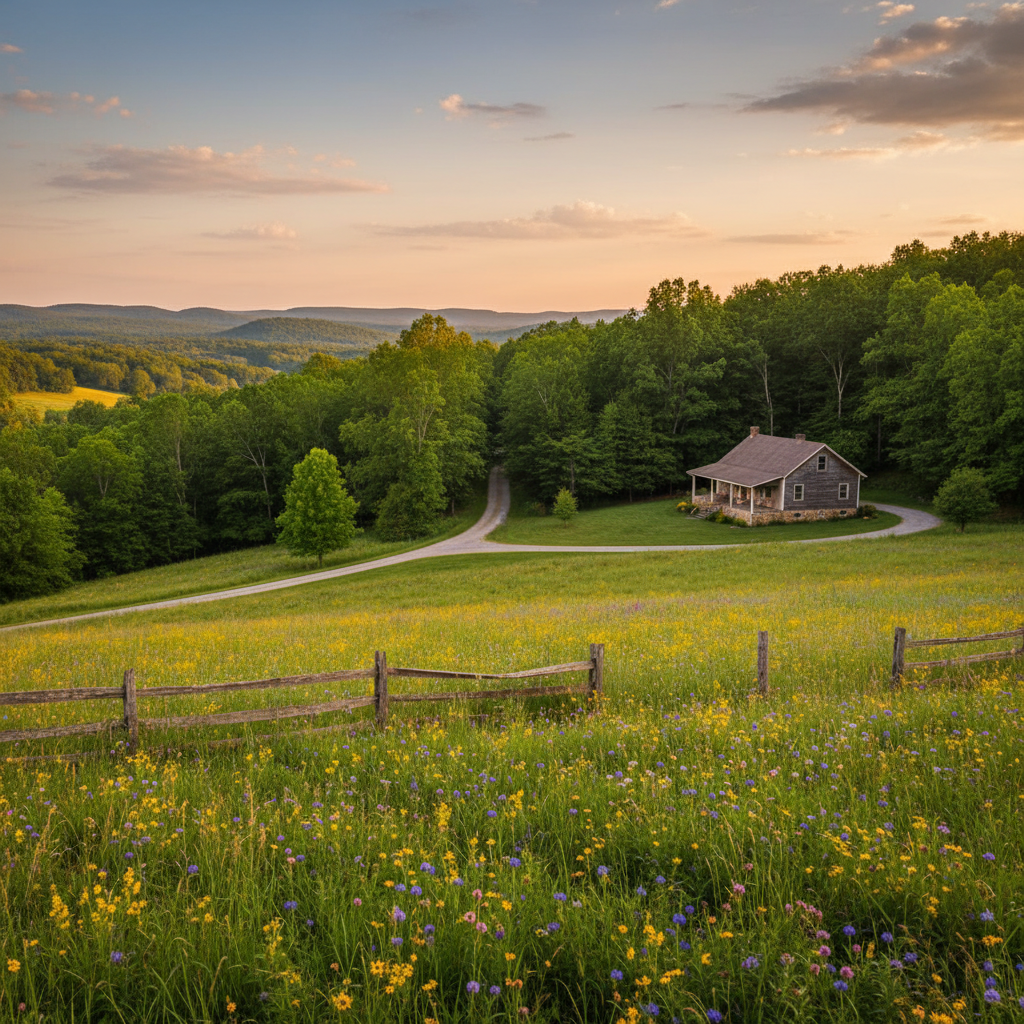
If you’re searching for an authentic slice of rural Tennessee—where land is affordable, neighbors are genuine, and you can actually build the life you’ve imagined—Pall Mall might be exactly what you’re looking for. Nestled in the heart of Fentress County, this quiet community offers something increasingly rare: genuine freedom, space, and community all rolled into one unrushed lifestyle. Pall Mall isn’t flashy. It’s not trying to be. What it is, however, is a welcoming gateway for first-time homebuyers and relocators who are tired of paying premium prices for crowded developments and endless commutes. Whether you’re dreaming of a homestead with acreage, a rural retreat with modern connectivity, or simply a slower pace of life, Pall Mall and the surrounding Fentress County area deserve a serious look. Why Pall Mall Stands Out for Buyers Pall Mall sits at a crossroads of opportunity. You’re close enough to Jamestown for essentials—schools, shopping, services—but far enough out that land is plentiful and affordable. The community has deep roots in agricultural heritage, which means the land itself is proven for farming, ranching, and homesteading. What many buyers don’t realize is that Pall Mall is increasingly attractive to remote workers and retirees relocating from out-of-state. Why? Twin Lakes Fiber has brought genuine high-speed internet to the area, meaning you don’t have to choose between rural living and reliable connectivity anymore. Land Opportunity & Affordability In Pall Mall and Fentress County, you’re not fighting bidding wars over 0.3-acre lots. Here, acreage is attainable. Whether you want 5 acres for a hobby farm, 20 acres for privacy, or 50+ acres for serious agricultural or timber investment, the pricing remains grounded in reality—often 60–70% less than comparable properties in Middle Tennessee suburbs or other mountain regions. First-time buyers often overlook rural properties because they seem complicated. Here’s the truth: they don’t have to be. Understanding Septic, Well, and Soil in Fentress County Most Pall Mall properties are on individual wells and septic systems rather than municipal utilities. Before you panic, know this: Fentress County soil is generally well-suited for septic performance. The plateau’s natural drainage and clay composition work in your favor. When you’re serious about a property, we’ll connect you with a licensed inspector who can run a perc test—a simple soil evaluation that tells you exactly what your land can support. Perc Test Cost: Usually $300–$600 for a professional evaluation Well Depth: Typically 100–300 feet in our area; your contractor will know the local geology Septic Sizing: Depends on bedroom count and daily usage; a licensed designer will ensure compliance The Real Cost of Living Here Property taxes in Tennessee are familiarity low, and Fentress County is no exception. Combined with affordable land and no state income tax, your monthly housing costs will likely run 40–50% below what you’d pay in Nashville, Chattanooga, or out-of-state markets. That matters when you’re building long-term wealth. Getting Started: Your First Steps If Pall Mall is calling to you, don’t hesitate. The best properties sell quietly in communities like this—often before they hit major listing sites. Tim and Lori Denehy have deep roots in Fentress County and know the available land, the local contractors, the septic specialists, and the long-term value propositions that matter to smart buyers. Ready to explore what Pall Mall and Fentress County have to offer? Contact Tim Denehy today at 702-569-9557 or visit denehyhomes.com/for-buyers/ for a personalized consultation. Learn more about the region at gofentress.com/, then let’s find your perfect homestead.
5 Essential Steps to Getting Pre-Approved for Your Jamestown TN Home Purchase
Buying a home in Jamestown, Tennessee or anywhere across Fentress County is an exciting prospect—especially when you’re ready to make a move to the serene Upper Cumberland Plateau. But before you fall in love with that perfect homestead or cabin with Big South Fork views, you need to understand one critical step: getting pre-approved for a mortgage. This isn’t just paperwork; it’s your ticket to serious buyer status and a clear understanding of your budget. As local real estate experts, Tim and Lori Denehy see firsthand how pre-approval transforms the buying process. Let’s walk through what you need to know. What’s the Difference Between Pre-Qualification and Pre-Approval? Many first-time buyers use these terms interchangeably, but they’re not the same. Pre-qualification is an informal estimate based on what you tell a lender about your finances—no documentation required. Pre-approval is the real deal. A lender verifies your income, credit, and assets, then issues a written commitment for a specific loan amount. When you’re shopping for homes in Jamestown or Clarkrange, sellers want to see pre-approval letters. It signals you’re serious and financially ready to close. Step 1: Check Your Credit Score Your credit score is the foundation of your mortgage application. Most conventional lenders require a minimum score of 620, though 740+ gets you better rates and terms. Pull your credit report from AnnualCreditReport.com (the only free, official source) and review it for errors. If you spot inaccuracies, dispute them immediately. Even small corrections can boost your score by 10–50 points, which translates to real savings over a 30-year mortgage. Step 2: Gather Your Financial Documents Lenders will ask for the following: Last 2 months of pay stubs and W-2s (or tax returns if self-employed) 2 months of bank statements (checking and savings accounts) Recent tax returns (typically the last 2 years) List of debts (credit cards, car loans, student loans) Proof of down payment funds (gift letters, if applicable) Having these ready—especially if you’re relocating to Fentress County from out of state—speeds up the entire process and shows lenders you’re organized and prepared. Understanding Tennessee Closing Costs Tennessee has some of the most reasonable closing costs in the nation. Expect to pay 2–5% of your purchase price in closing fees, which typically include: Title insurance and search fees Appraisal and inspection costs Lender’s origination fee Property taxes (prorated) Recording fees Our team at Team Denehy – Mitchell Real Estate can walk you through typical closing costs for homes in your target area, whether that’s a homestead in Allardt or a rural retreat near Big South Fork. Step 3: Choose Your Lender Shop around. Banks, credit unions, and mortgage brokers all offer different rates and terms. Get quotes from at least three lenders and compare: Interest rates (APR, not just the rate) Origination fees and points Processing timeline Customer service reputation Step 4: Submit Your Application Complete the Uniform Residential Loan Application (Form 1003) and submit all documents. The lender will order an appraisal and conduct a full underwriting review. This typically takes 3–5 business days. Step 5: Receive Your Pre-Approval Letter Once underwriting is complete, you’ll receive a formal pre-approval letter stating your approved loan amount, interest rate, and conditions. This is your golden ticket to making an offer on your Jamestown or Fentress County property. Ready to Start Your Journey? Getting pre-approved is the smart first step—but choosing the right property and agent matters just as much. Tim and Lori Denehy have helped dozens of buyers navigate the Plateau’s unique market. Whether you’re looking for unrestricted acreage, a move-in-ready home, or a cabin investment property, we know exactly what’s available and how to help you close the deal. Call Tim Denehy at 702-569-9557 or visit DeneyhHomes.com today to discuss your pre-approval timeline and start exploring homes in Jamestown and Fentress County. Ready to take the next step? Our buyer’s guide has everything you need to know about purchasing in Fentress County.
Probate and Property: A Guide for Heirs and Executors in Tennessee
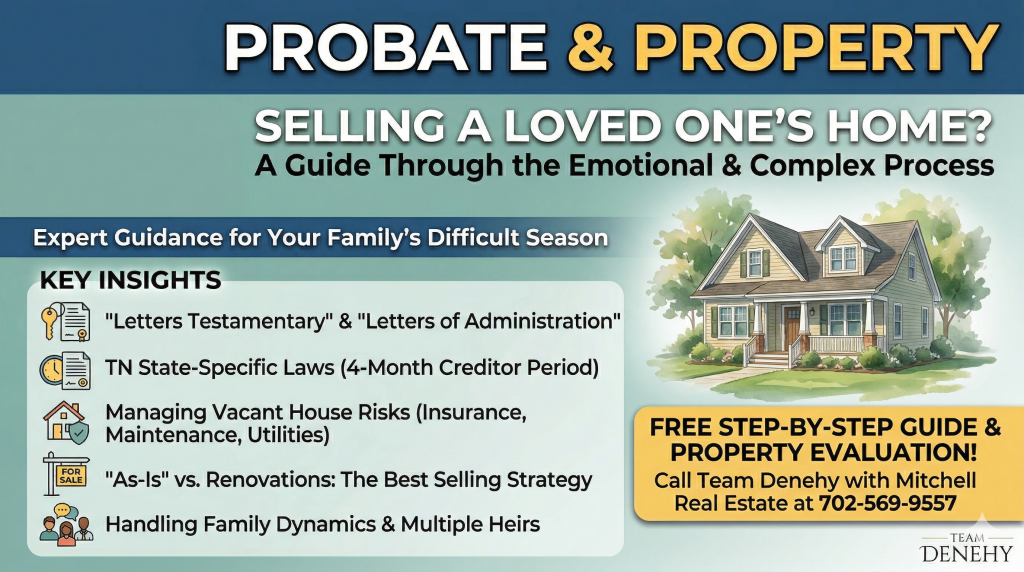
Are you navigating the emotional and complex process of selling a loved one’s home? In this episode of “Probate and Property,” Team Denehy provides expert, patient, and reassuring guidance to help your family through this difficult season. We break down exactly why an estate property cannot be sold immediately and explain essential legal documents like “Letters Testamentary” and “Letters of Administration”. If you are dealing with a Tennessee estate, we cover critical state-specific laws, including the 4-month creditor period and how property vesting works before a clean title can be passed to a buyer. You will also learn practical tips for managing the “vacant house” risk, from securing a vacant home insurance policy to maintaining the lawn and keeping utilities on during winter. Finally, we explore the best selling strategies—whether that means selling “As-Is” to an investor for a hassle-free closing or completing light renovations for top market value—and discuss how to handle family dynamics when multiple heirs have different opinions on the sale price. For a step-by-step guide or a confidential evaluation of an estate property, call Team Denehy with Mitchell Real Estate at 702-569-9557.
Why a Zillow Zestimate Is Wrong | Free Home Value in Jamestown TN
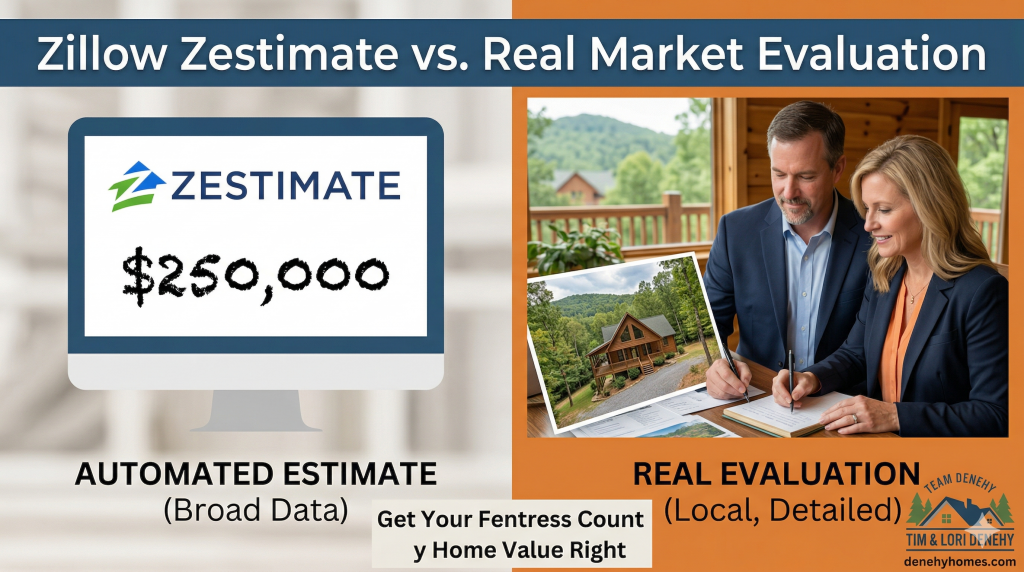
If you’ve ever looked up your home on Zillow, you’ve probably seen the Zestimate — that automated number that tells you what your home might be worth. It’s convenient, it’s instant, and it’s often wrong. Here’s why that matters, especially in a market like Fentress County. What a Zestimate Actually Is A Zestimate is a computer-generated estimate based on public records, tax data, and nearby sales. It doesn’t know that you put in hardwood floors last year, that your property backs up to a creek, or that your neighbor’s house sat vacant for six months before it sold. It’s working with broad patterns — not your home. Zillow itself acknowledges that its national median error rate for off-market homes is around 6–7%. That sounds small, but on a $250,000 home, that’s up to a $17,500 swing — in either direction. In Rural Markets, the Gap Gets Wider In urban areas with lots of similar homes and frequent sales, automated tools have more data to work with. In Fentress County? Not so much. Our market has unique land parcels, log cabins on acreage, mountain views, creek frontage, hunting land — features that an algorithm simply can’t price accurately. Comps can be miles apart and vary dramatically based on details no database captures. What a Real Market Evaluation Includes When Tim or Lori walks through your home, we’re doing something no algorithm can: Comparing your home to actual recent sales in your area — not just zip code averages Adjusting for condition, updates, and features the tax record doesn’t reflect Accounting for current buyer demand and what’s sitting on the market right now Pricing your property to attract real buyers, not just generate a click Don’t Let a Number Cost You Money Overpricing based on a Zestimate leads to a home sitting too long. Underpricing means leaving money on the table. Either way, that number on a screen could cost you thousands. If you’re curious what your home is actually worth in today’s Fentress County market, we’d love to talk. A real evaluation is free, local, and based on what buyers are actually paying right now. 📞 Tim & Lori Denehy — Team Denehy at Mitchell Real Estate 702-569-9557 | denehyhomes.com
Why Spring 2026 Is a Smart Time to Buy Land in Fentress County, TN — Jamestown Area Market Update
If you’ve been thinking about buying raw land in Tennessee, Spring 2026 is shaping up to be one of the most opportune windows you’ll see in the next several years. The Jamestown area and greater Fentress County are experiencing a unique convergence of factors—rising out-of-state interest, historically low inventory, and favorable financing conditions—that spell urgency for serious land buyers. Whether you’re looking for a recreational retreat, a homestead, or an investment property near the Big South Fork National River and Recreation Area, now is the time to move. The Fentress County Land Market Right Now Fentress County is not experiencing a typical real estate boom. Instead, it’s seeing something more sustainable and authentic: genuine, steady demand from buyers who are tired of crowded markets and inflated prices. The difference matters. Unlike flash-in-the-pan appreciation, this is driven by people relocating for lifestyle, remote work capability, and access to natural amenities that simply don’t exist elsewhere at this price point. Current inventory of raw land parcels in the Jamestown area remains remarkably tight. Properties that would list for $8,000–$12,000 per acre in more populated regions of Tennessee are moving at $2,500–$5,000 per acre here—and even those are attracting multiple inquiries within days of listing. This isn’t hype. This is scarcity meeting demand in a market where locals and newcomers alike understand what they’re getting. Out-of-State Buyers Are Taking Notice Over the past eighteen months, we’ve seen a marked increase in serious inquiries from California, Florida, Colorado, and the Northeast. These aren’t casual browsers. They’re remote workers, early retirees, and investment groups who have done their homework. They understand that Twin Lakes Fiber is bringing high-speed internet to rural Fentress County. They know the Big South Fork is a world-class outdoor destination. And they’ve calculated that a 20-acre parcel with trail access near Jamestown costs less than a small condo in Denver or Austin. This wave of out-of-state interest is real, but it’s not yet saturated the market the way it has in places like Asheville or the Tennessee Hill Country. That window—where you can still buy excellent land at true country prices—is narrowing. Why Big South Fork Proximity Drives Long-Term Land Value The Big South Fork National River and Recreation Area is a game-changer for property values in Fentress County. This isn’t just about weekend hiking. Serious outdoor enthusiasts, cabin rental operators, and lifestyle-focused families view proximity to Big South Fork as a core amenity, not a bonus. Hiking and trail access: Over 150 miles of maintained trails attract visitors year-round, creating rental income potential for cabins and glamping properties on adjacent land. Fishing and paddling: The New River and Clear Fork provide world-class whitewater and calm-water paddling, driving tourism and property appeal. Hunting and wildlife: Fentress County’s timber and game resources attract hunters and conservation-minded landowners willing to pay premium prices for productive acreage. Sense of place: The Big South Fork corridor represents authentic Appalachian heritage, outdoor culture, and community—things remote workers and retirees actively seek. Properties within 5–15 minutes of Big South Fork trailheads have appreciated steadily over the past three years, and that trend is accelerating as awareness spreads among target demographics. Inventory Shortage Means Buyer Urgency Is Real This is not a buyer’s market by traditional measures. It’s a strategic market—one where the fundamentals favor those who act decisively. The reality: Fentress County simply doesn’t have enough developable land parcels to meet current and projected demand. Historical landholdings are family-owned and rarely come to market. When they do, serious buyers are making offers within 48 hours. We’ve documented multiple instances where properties listed on Friday closed by the following Wednesday. Spring is peak season for land shopping. By June, inventory tightens further as remaining parcels are under contract. By July and August, good land in the right locations becomes exceptionally scarce until fall activity picks up again. Financing Raw Land in Fentress County: What You Need to Know A common misconception is that financing raw land is impossible or prohibitively expensive. That’s outdated. Spring 2026 offers improved financing conditions compared to even eighteen months ago. Your Financing Options Rural Development (USDA) Loans: If your land is in an eligible area and you meet income thresholds, USDA financing can cover up to 90% of purchase price with favorable rates. Many Fentress County properties qualify. Portfolio Lenders: Regional banks and credit unions in Tennessee often hold land mortgages in-portfolio, offering 15–20 year terms at competitive rates (currently 6.5%–7.5% for qualified buyers). Conventional Construction Financing: If you’re building within 12–24 months, many lenders will finance raw land as Phase 1 of a construction loan, rolling it into your primary mortgage upon completion. Cash and Owner Financing: Private sellers in Fentress County often carry notes for qualified buyers, especially for properties over 10 acres. This flexibility is a huge advantage for investors. The key is working with a real estate team that understands local lender relationships and can guide you toward the right product. Generic national mortgage brokers often underestimate what’s possible in rural markets. The Urgency: Why Wait? Land values in Fentress County are still rational compared to surrounding regions and projected growth corridors. But that window narrows every quarter. Out-of-state money is moving into Tennessee’s outdoor-recreation corridors at an accelerating pace. Institutional investors are beginning to recognize the Plateau’s potential. Local young people are returning with remote jobs and wanting to build. In 12–24 months, the calculus may shift entirely. Current pricing reflects a market still in the early stages of recognition. Spring 2026 offers a rare chance to buy at today’s prices, not tomorrow’s. Take the Next Step If you’re serious about buying land near Jamestown or anywhere in Fentress County, don’t wait for inventory to tighten further or out-of-state competition to intensify. Tim and Lori Denehy at Team Denehy – Mitchell Real Estate have spent years building relationships with local landowners, understanding soil conditions, access issues, and the real potential of every parcel. They can show you raw land that fits your vision, walk you through financing
Is it Cheaper to Rent or Buy in Jamestown, TN in 2026? A Fresh Look at Your Housing Options
Is it Cheaper to Rent or Buy in Jamestown, TN in 2026? A Fresh Look at Your Housing Options If you’re sitting at your kitchen table right now, staring at your lease agreement or scrolling through rental listings, asking yourself “Should I finally take the plunge and buy a home here in Jamestown?” — you’re not alone. This is one of the most important financial decisions you’ll ever make, and honestly, it deserves more than just a gut feeling. The truth is, whether renting or buying makes more sense for you in 2026 isn’t a one-size-fits-all answer. But here in Fentress County, where we have some unique advantages compared to many parts of Tennessee and the nation, there’s a compelling story to tell. Let me walk you through what’s really happening in our local market right now. The Current Jamestown Housing Landscape Our little corner of the Upper Cumberland has changed quite a bit over the last few years. We’re seeing more people discovering what we’ve always known — that Jamestown offers an incredible quality of life without the price tags you’ll find closer to Nashville or other growing areas. Home prices here remain genuinely affordable, and rental markets haven’t exploded the way they have elsewhere. But “affordable” is relative, and your personal financial situation matters more than any national trend. That’s why I want to help you think through this decision with fresh eyes. The Case for Renting in 2026 Let’s be honest — there are legitimate reasons to rent, especially right now: Flexibility and Lower Upfront Costs: A lease gives you freedom. If life takes you somewhere new in a couple of years, you’re not locked into a mortgage or dealing with selling complications. Your upfront costs are minimal — just first month, last month, and maybe a deposit. Predictable Monthly Payments: Your rent is your rent. There are no surprise roof repairs, no HVAC emergencies draining your savings account at 2 AM. That peace of mind has real value. Perfect for Short-Term Planning: If you’re building up your down payment fund, working through a career transition, or just not sure where you’ll be in five years, renting keeps your options open. Maintenance-Free Living: Your landlord handles everything. Seriously. You call about a leaky faucet, and it gets fixed. That’s not your problem anymore. For renters in Jamestown, monthly payments typically range from $600 to $1,200 depending on the size and condition of the property. That’s genuinely affordable by any measure. The Case for Buying in Jamestown in 2026 But here’s where it gets interesting — and where I think the story shifts in favor of buying, especially for people who are ready to put down roots: Building Equity Instead of Paying Someone Else: Every single mortgage payment you make is an investment in your future, not your landlord’s retirement. Over 15 or 30 years, that difference compounds in powerful ways. You’re not just paying to live somewhere — you’re building wealth. Historically Low Prices Here: Jamestown and Fentress County still offer some of the most affordable home prices in Tennessee. You can own a beautiful, well-maintained home here for what many people spend on rent in other communities. That’s not an accident; that’s an opportunity. Stable, Predictable Housing Costs: With a fixed-rate mortgage, your principal and interest payment never changes. Sure, property taxes and insurance might creep up slightly over time, but your housing cost becomes predictable in a way rent never will be. Landlords raise rent. Banks don’t raise your mortgage payment. Tax Benefits and Deductions: Homeownership comes with real tax advantages. Mortgage interest deductions can meaningfully reduce your tax burden, especially in your early years of ownership. Freedom and Stability: You can paint that bedroom whatever color you want. You can plant trees, build a garden, add a deck, or knock down walls. Your home becomes an expression of who you are, not just a place you’re allowed to temporarily occupy. Generational Wealth: Owning a home here means something to pass on to your kids or grandkids. There’s deep value in that legacy. Current home prices in our area range from the low $100,000s for smaller properties all the way to the $400,000+ range for premium homes on acreage. The median home price is somewhere in that sweet spot where a working family can realistically build equity. The Numbers That Actually Matter Here’s what I always tell people: numbers tell a story, but only if you’re looking at the right ones. You need to compare your actual monthly rental payment against what you’d pay for a mortgage payment on a home you can actually afford in Jamestown — not some theoretical home in some other market. You also need to factor in: Your down payment savings (or lack thereof) How long you plan to stay in Jamestown Current mortgage interest rates Your credit score and lending options Closing costs and other one-time expenses The tax benefits you’d actually realize That’s why I’ve created a tool specifically for people in our community who want to run these numbers for themselves. Our Rent vs. Buy Calculator for Fentress County takes your specific situation and shows you the actual financial comparison over 5, 10, and 15 year periods. It’s personalized to our market, uses our real price points, and tells you the truth about what makes sense for you. The Emotional Side Matters Too Here’s something people don’t talk about enough: this decision isn’t purely financial. How do you feel about stability? About having a real home base in Jamestown? About building something that’s truly yours? For many people who’ve moved to our area specifically because they love it here, buying a home is about much more than the numbers. It’s about commitment, community, and creating the life you actually want to live. That’s inspirational stuff, and it matters. What 2026 Brings to Jamestown The Upper Cumberland is quietly becoming a destination for people seeking genuine community, affordable living, and a slower pace. That’s driving subtle but
Your First Home in Jamestown: Understanding the Real Costs Beyond Your Mortgage Payment
Your First Home in Jamestown: Understanding the Real Costs Beyond Your Mortgage Payment Congratulations on taking the leap toward homeownership in Fentress County! If you’re like most first-time buyers I talk to here in Jamestown, you’ve probably done the math on your monthly mortgage payment and felt pretty good about what you can afford. But here’s something I wish someone had told me when I bought my first home: that mortgage payment is only part of the story. When you’re buying your first home in rural Tennessee, it’s easy to focus solely on the loan amount and monthly payment. But true homeownership—especially in a place like Fentress County where many of us own acreage and live a bit removed from town—involves costs that can really add up if you’re not prepared for them. Let me walk you through what to actually budget for so you can make a smart, confident decision. Property Taxes in Fentress County: What You’ll Actually Pay First, let’s talk about property taxes, because this is something that surprises a lot of new buyers. Tennessee has no state income tax, which is wonderful for your overall financial picture, but we do pay property taxes at the county level. In Fentress County, the property tax rate is approximately 0.67% of your assessed property value annually. Here’s what that looks like in real numbers: If you’re buying a home worth $150,000, you’re looking at roughly $1,005 per year in property taxes, or about $84 per month. For a $200,000 home, that’s about $1,340 annually. Now, these taxes go into an escrow account handled by your lender, so they’re built into your monthly payment, but you need to know they’re there and plan for them. The good news? If you’re 65 or older, the Tennessee homestead exemption can really help—it can reduce your taxable property value by up to $175,000 depending on your income. We’ll dive deeper into that in another post, but it’s worth knowing about. Homeowners Insurance: Don’t Underestimate This Here in rural Fentress County, homeowners insurance typically costs between $800 and $1,500 per year, depending on your home’s age, condition, and location. If you’re financing your home (which most first-time buyers are), your lender requires you to carry insurance—and they’ll want proof before you get the keys. For a newer home in good condition, you might be on the lower end. For an older home, especially one with a metal roof or out in the country on a longer distance from fire protection, insurance can climb. This is another cost that gets wrapped into your monthly payment, but it’s crucial to get an actual quote during the homebuying process so you’re not surprised at closing. Maintenance and Repairs: The Budget Surprise Here’s the real talk: homeownership requires maintenance, and rural Tennessee homes often require more maintenance than newer suburban homes. This is especially true if you’re buying an older home—and let’s be honest, there are a lot of beautiful older homes here in Jamestown that have character and charm but also have systems that need attention. Financial experts recommend budgeting 1-2% of your home’s purchase price annually for maintenance and repairs. That means: For a $150,000 home: $1,500-$3,000 per year For a $200,000 home: $2,000-$4,000 per year For a $250,000 home: $2,500-$5,000 per year What does this cover? Roof repairs, HVAC maintenance, plumbing issues, exterior painting, deck repairs, septic system maintenance (if you have one), well pump repairs—the list goes on. In rural areas, these repairs can sometimes cost more because contractors have to travel farther, so that budget is realistic. Utilities and Well/Septic Systems If you’re buying in a neighborhood in Jamestown proper, you’ll have municipal water and sewer, which simplifies things. But if you’re buying property with acreage—and many of us do—you might have a private well and septic system. These systems need regular maintenance. A septic system pumping typically costs $300-$500 every 3-5 years. A well needs testing annually and may need occasional repairs. Budget for these in your annual homeownership costs. It’s not huge money month-to-month, but it’s not zero either. Putting It All Together So let’s say you’ve found a wonderful $180,000 home in Fentress County. Your mortgage payment might be around $1,000 per month (depending on your down payment and interest rate). But your true monthly housing cost probably looks like this: Mortgage payment: $1,000 Property taxes: ~$100/month Insurance: ~$100/month Maintenance reserve: ~$200/month Total: ~$1,400/month The good news? You’re still getting a home in beautiful Upper Cumberland for less than most folks pay in bigger Tennessee cities. The better news? Once you understand these costs upfront, you can plan for them confidently and enjoy your new home without financial stress. If you want to talk through what homeownership really costs in Fentress County, I’m always here to help. That’s what neighbors do.
Understanding Well and Septic Systems: A First-Time Homebuyer’s Guide to Rural Tennessee Living
If you’re considering buying your first home in Jamestown or anywhere in Fentress County, you’ve probably noticed that many properties come with their own well and septic system. Coming from city life where you simply turned on the tap or flushed without a second thought, these systems might seem intimidating. Don’t worry – thousands of families throughout the Upper Cumberland region rely on wells and septic systems every day, and with a little knowledge, you’ll feel confident about these essential home systems. Why Wells and Septic Systems Are Common in Rural Tennessee Unlike Nashville or Knoxville where city utilities serve dense populations, rural Fentress County properties often sit on larger lots where connecting to municipal water and sewer lines isn’t practical or cost-effective. This independence actually offers some wonderful benefits – you’re not subject to city water restrictions during dry spells, your monthly utility bills are typically lower, and you have complete control over your water and waste management systems. Many of our local families have been successfully managing their own wells and septic systems for generations. The key is understanding how they work and what to look for when buying a home. Understanding Your Well System Most homes in our area use drilled wells that tap into underground aquifers. Here in the Upper Cumberland, we’re blessed with generally good groundwater quality thanks to our geography and limestone formations. Key Components of Your Well System The well itself: A drilled hole with a casing pipe that extends down to the water source Submersible pump: Sits down in the well and pushes water up to your home Pressure tank: Stores water under pressure so your pump doesn’t run constantly Control systems: Electrical components that manage when the pump runs During your home inspection, make sure to test the water quality and flow rate. In Fentress County, most wells produce excellent water, but it’s always wise to test for bacteria, nitrates, and common minerals. The health department can provide guidance on local testing labs. What to Ask About the Well When looking at properties, ask about the well’s depth, age, and recent maintenance. A typical well in our area might be anywhere from 100 to 300 feet deep. Find out when the pump was last replaced – submersible pumps typically last 15-25 years with proper maintenance. Understanding Septic Systems Your septic system handles all the wastewater from your home. It’s designed to treat and filter water naturally before it returns to the groundwater system. How Septic Systems Work Septic tank: Wastewater flows here first, where solids settle and begin breaking down Distribution box: Sends partially treated water to the drain field Drain field (leach field): Network of perforated pipes in gravel beds where final filtering occurs The soil composition in Fentress County generally works well for septic systems, though some areas with clay soils may require special design considerations. Septic System Red Flags During your home search, watch for these warning signs: Sewage odors around the house or yard Wet, soggy areas over the drain field Slow drains or frequent backups Lush, unusually green grass over the septic area Maintenance and Costs Both systems require regular maintenance, but the costs are predictable and manageable when you budget properly. Well Maintenance Annual water testing costs around $50-100. Pump replacement, when needed after many years, typically runs $1,500-3,000. Many local families go decades between major well repairs with proper care. Septic Maintenance Plan to pump your septic tank every 3-5 years, costing $300-500 in our area. This single maintenance step prevents most major problems. Avoid flushing non-biodegradable items, and your system should serve you well for 20-30 years or more. Getting Professional Inspections Never skip professional inspections of these systems. In Tennessee, septic inspections typically cost $300-500, while well inspections run $200-400. These small investments can save you thousands by identifying problems before you buy. Local inspectors understand the specific conditions in Fentress County and can spot issues that might not be obvious to general home inspectors from larger cities. The Bottom Line Wells and septic systems shouldn’t scare you away from your dream of rural Tennessee living. They’re reliable, cost-effective, and give you independence from city utilities. Many families find the peace of mind that comes with controlling their own water and waste systems is worth far more than the minimal extra responsibility involved. With proper inspection before purchase and basic maintenance afterward, these systems will serve your family reliably for decades. Welcome to the wonderful world of rural Tennessee homeownership – you’re going to love the freedom and self-sufficiency it brings.