Credit Score Preparation for Home Buyers in Jamestown TN: Your Path to Plateau Property Ownership

If you’re dreaming of owning property here in beautiful Fentress County, your credit score is going to be your best friend—or your biggest hurdle. As someone who’s helped countless families find their perfect piece of Tennessee paradise, I can tell you that understanding your credit situation before you start house hunting will save you time, money, and heartache down the road. Why Your Credit Score Matters More in Rural Tennessee Here on the Cumberland Plateau, we have unique lending considerations that differ from more urban markets. Many of our gorgeous properties in Jamestown, Allardt, and Pall Mall sit on larger lots or unrestricted land, which can sometimes require specialized lending programs. Lenders pay extra attention to credit scores when dealing with rural properties, especially those requiring well and septic systems. A strong credit score opens doors to better interest rates and more loan options, including USDA Rural Development loans that can offer zero down payment opportunities for eligible properties in our area. The Credit Score Breakdown for Tennessee Home Buyers Excellent Credit (740+) Access to the best interest rates available Qualification for conventional loans with as little as 3% down Better chances for jumbo loans on those dream horse properties near Big South Fork Streamlined approval processes Good Credit (670-739) Still competitive rates with most lenders FHA loan eligibility with 3.5% down VA loan benefits if you’re a veteran looking to retire to Tennessee USDA loan possibilities for rural properties Fair Credit (580-669) FHA loans still possible, though with higher rates May require larger down payments Limited lender options Worth improving before serious house hunting Quick Credit Improvement Strategies for Plateau Property Dreams If your score needs work, don’t despair! Here are proven strategies that work: Pay Down High Balances Focus on credit cards with balances above 30% of their limits. Even small improvements here can boost your score within 30-60 days. Don’t Close Old Accounts Keep those older credit cards open, even if you don’t use them. Length of credit history matters, especially when you’re looking at properties that might require non-conventional financing. Check for Errors Pull your free credit reports from all three bureaus. Dispute any errors you find—this alone can sometimes add 20-50 points to your score. Tennessee-Specific Credit Considerations Our local lenders understand the unique aspects of Fentress County real estate. They know that a home with a well and septic system isn’t a red flag—it’s normal here. They understand that unrestricted land offers opportunities that restricted subdivisions don’t. Many of our buyers are relocating from out-of-state, attracted by our high-speed Twin Lakes Fiber internet that makes remote work possible, combined with our incredible cost of living. If this sounds like you, start working on your credit now, before you make the move. Pre-Approval: Your Secret Weapon Once your credit is in good shape, getting pre-approved should be your next step. In our market, where desirable properties with horse facilities or Big South Fork access can move quickly, a pre-approval letter shows sellers you’re serious and ready to act. Pre-approval also helps you understand exactly what you can afford, including those additional costs that come with rural properties like well inspections and septic evaluations. Ready to Take the Next Step? Whether you’re dreaming of unrestricted land in Clarkrange, a horse-friendly property near Pall Mall, or a cozy home in historic Allardt, your credit score is the foundation of making those dreams reality. The good news? You don’t have to navigate this process alone. Ready to discuss your home buying goals and get connected with trusted local lenders who understand our market? Visit DenehyHomes.com or call Tim Denehy at 702-569-9557 for a consultation. Let’s turn your Tennessee property dreams into reality, one credit point at a time.
No State Income Tax in Tennessee: How This Advantage Makes Fentress County an Even Smarter Real Estate Investment
When folks from other states visit our beautiful corner of Tennessee here in Fentress County, they’re often amazed by our pristine lakes, rolling hills, and friendly community spirit. But there’s another reason that makes Tennessee – and specifically our Upper Cumberland region – such an attractive place to call home: we’re one of only a handful of states with no state income tax. As someone who’s helped countless families find their perfect home in Jamestown and throughout Fentress County, I can tell you that Tennessee’s tax-friendly status is increasingly becoming a major factor in people’s decision to relocate here. Let me break down exactly what this means for your wallet and why it makes our area an even smarter choice for your next real estate investment. Understanding Tennessee’s Tax Structure Tennessee is one of just nine states that doesn’t impose a state income tax on wages and salaries. This means that whether you’re earning $40,000 or $140,000 a year, the state won’t take a percentage of your paycheck like most other states do. For a family earning $75,000 annually, this could mean keeping an extra $3,000 to $5,000 in your pocket each year compared to living in states with income taxes. Now, it’s important to understand that Tennessee does have what’s called a “Hall Income Tax” on certain investment income like interest and dividends, but this only affects a small percentage of residents and is set to be completely phased out by 2025. For the vast majority of working families looking at real estate in Fentress County, your earned income will be completely free from state income tax. What This Means for Your Monthly Budget When you’re not sending a chunk of your paycheck to state tax collectors, that money stays in your local economy – and more importantly, in your family’s budget. This extra breathing room can make a significant difference in your ability to afford that dream home overlooking Dale Hollow Lake or that charming farmhouse on the outskirts of Jamestown. I’ve worked with families who relocated here from states like Kentucky, where they were paying 5% state income tax, or North Carolina with rates up to 5.25%. For these families, the tax savings alone often covered a significant portion of their monthly mortgage payment. Imagine having an extra $300-500 each month to put toward your mortgage principal, home improvements, or simply enjoying the outdoor recreation that makes our area so special. Real Estate Affordability Gets Even Better Fentress County already offers some of the most affordable real estate in Tennessee, with median home prices well below the national average. When you combine our reasonable property costs with the absence of state income tax, the financial advantages become even more compelling. That cabin you’ve been dreaming about near Pickett State Park suddenly becomes much more attainable when you’re keeping thousands more of your income each year. Attracting Retirees and Remote Workers The no-income-tax advantage is particularly attractive to two growing demographics in our area: retirees and remote workers. Retirees appreciate that their retirement account distributions won’t be subject to state income tax, allowing their nest eggs to stretch further. Meanwhile, remote workers who can live anywhere are discovering they can maintain their higher salaries while enjoying a much lower cost of living and no state income tax burden. This influx of new residents is great news for current property owners in Fentress County. As more people discover the financial advantages of Tennessee living combined with our area’s natural beauty and recreational opportunities, property values continue to appreciate steadily. Business-Friendly Environment Tennessee’s tax structure isn’t just beneficial for individual homeowners – it’s also incredibly friendly to small business owners and entrepreneurs. If you’re thinking about starting a business in Jamestown or anywhere in the Upper Cumberland, you’ll appreciate that the state’s approach to taxation allows you to reinvest more of your earnings back into your enterprise. This business-friendly environment has helped create a stable local economy that supports real estate values. When businesses can thrive, they create jobs, which brings more families to the area, which increases demand for housing. It’s a positive cycle that benefits everyone in our community. Comparing Tennessee to Neighboring States When you look at our neighboring states, Tennessee’s tax advantage becomes even more apparent. Kentucky taxes income at rates from 2% to 5%, while Virginia ranges from 2% to 5.75%. North Carolina’s rates go up to 5.25%. For someone earning $60,000 annually, moving from one of these states to Tennessee could mean keeping an extra $2,000 to $3,000 per year – money that could go toward a larger down payment, home improvements, or building an emergency fund. Long-term Wealth Building Advantages Over the course of a 30-year career, the savings from Tennessee’s no-income-tax policy can be substantial. For a middle-class family, we’re talking about potentially tens of thousands of dollars that can be invested in real estate, retirement accounts, or other wealth-building strategies instead of going to state tax collectors. This makes purchasing real estate in Fentress County not just a lifestyle choice, but a smart financial strategy for long-term wealth building. What to Consider When Making Your Move While the no-income-tax advantage is significant, it’s important to consider the complete picture when evaluating a move to Tennessee. We do have sales tax and property taxes, though our property tax rates in Fentress County remain very reasonable compared to many areas. The key is looking at your total tax burden and cost of living, not just one component. When you factor in our affordable housing costs, lower utility rates, and the absence of state income tax, most families find their overall financial picture improves significantly. Making Your Tennessee Dreams Reality If you’re considering making the move to Tennessee to take advantage of our tax-friendly status and incredible quality of life, I’d love to help you explore your options here in Fentress County. Whether you’re looking for a retirement retreat, a family home with acreage, or an investment property, our area offers incredible value
Tennessee Property Taxes and Homestead Exemptions: What Fentress County Homeowners Need to Know

If you’re a homeowner in Fentress County or considering buying property in our beautiful corner of the Upper Cumberland, understanding Tennessee’s property tax system is crucial for your financial planning. As someone who’s helped countless families navigate real estate decisions in Jamestown and throughout our region, I want to share the essential information you need about property taxes, homestead exemptions, and the unique laws that make Tennessee an attractive place to own property. Tennessee’s Property Tax Advantage One of the biggest draws for families moving to Tennessee, particularly rural areas like Fentress County, is our tax-friendly environment. Tennessee has no state income tax on wages and salaries, which means your property taxes play a more significant role in your overall tax burden. The good news? Tennessee property tax rates are generally lower than many neighboring states, making homeownership more affordable for working families. In Fentress County, property taxes fund essential local services including our schools, road maintenance, emergency services, and county government operations. Understanding how these taxes work helps you make informed decisions about where to buy and how much house you can comfortably afford. How Property Taxes Are Calculated in Tennessee Tennessee uses an assessment system where properties are appraised at their fair market value, then assessed at a percentage of that value. For residential properties, the assessment ratio is 25% of the appraised value. This means if your home is worth $200,000, you’ll be taxed on an assessed value of $50,000. The tax rate, expressed in dollars per $100 of assessed value, varies by county and municipality. In Fentress County, homeowners benefit from relatively low tax rates compared to urban areas. This makes our region particularly attractive for retirees, young families, and anyone looking to stretch their housing dollar further. Property Appraisal Schedule Tennessee law requires counties to conduct property reappraisals every four to six years. Fentress County follows this schedule, ensuring assessments reflect current market conditions. During periods of rising property values, this can mean higher assessments, but the regular schedule prevents sudden, dramatic increases that might catch homeowners off guard. Tennessee’s Homestead Exemption: Your Property Tax Relief Tennessee’s homestead exemption is a valuable benefit that reduces your property tax burden on your primary residence. Currently, qualified homeowners can exempt up to $25,000 of assessed value from county property taxes and $7,500 of assessed value from school taxes. For a typical Fentress County homeowner, this exemption can save several hundred dollars annually. On a $150,000 home (assessed at $37,500), the homestead exemption could reduce your taxable assessment significantly, translating to real money back in your pocket each year. Qualifying for the Homestead Exemption To qualify for Tennessee’s homestead exemption, you must: Own and occupy the property as your primary residence on January 1st of the tax year Be a Tennessee resident Apply for the exemption through your county tax assessor’s office Provide proof of residency and ownership The application process in Fentress County is straightforward. Our county assessor’s office in Jamestown can help walk you through the paperwork, and once approved, the exemption continues automatically as long as you meet the qualifications. Additional Property Tax Exemptions and Relief Programs Beyond the standard homestead exemption, Tennessee offers several other programs that can help reduce your property tax burden: Elderly and Disabled Tax Relief Homeowners aged 65 or older, or those who are disabled, may qualify for additional property tax relief. This program can freeze your property’s assessed value or provide additional exemptions based on income limits. For many of our older residents in rural Fentress County living on fixed incomes, this relief can be substantial. Disabled Veteran Exemptions Tennessee provides generous property tax exemptions for disabled veterans. Depending on the disability rating, veterans may qualify for partial or complete exemption from property taxes on their primary residence. This benefit recognizes the service and sacrifice of our military families who choose to make Tennessee their home. Agricultural and Forest Land Classification If you own rural property in Fentress County used for farming, forestry, or agriculture, you may qualify for special tax treatment. Agricultural land is assessed at its use value rather than fair market value, which can result in significantly lower property taxes. This classification helps preserve our rural character and supports local farming families. Understanding Your Property Tax Bill Your annual property tax bill in Tennessee typically includes several components: County taxes – Fund county government services and operations School taxes – Support our local school districts Municipal taxes – If you live within city limits (like Jamestown) Special district taxes – For services like fire protection or library districts Property taxes in Fentress County are typically due October 1st each year, though you can usually pay in installments. Many homeowners choose to escrow their property taxes with their mortgage payments, spreading the cost throughout the year. Tennessee’s Truth in Taxation Law Tennessee’s Truth in Taxation law protects property owners from unexpected tax increases. When property values rise due to reappraisal, local governments must adjust tax rates to generate the same revenue, unless they specifically vote to increase taxes. This law ensures transparency and gives taxpayers a voice in local tax policy. Planning Tips for Fentress County Property Owners As you consider property ownership in our area, keep these strategies in mind: Apply for all exemptions you qualify for – Don’t leave money on the table Budget for property taxes – Even with exemptions, plan for annual tax obligations Consider timing – Purchase dates can affect your first year’s tax obligations Understand your assessment – Review your property’s assessed value and appeal if necessary The Bottom Line for Upper Cumberland Homeowners Tennessee’s property tax system, combined with our lack of state income tax, creates an attractive environment for homeownership. In Fentress County, you’ll benefit from reasonable tax rates, meaningful exemptions, and a system designed to be fair and predictable. Whether you’re a first-time homebuyer, growing family, or retiree looking for a peaceful place to settle, understanding these tax advantages can help you make the most of your
Jamestown, TN Real Estate Guide: Discovering Your Perfect Home in Tennessee’s Hidden Gem
Nestled in the heart of the Upper Cumberland region, Jamestown, Tennessee offers a unique blend of small-town charm, natural beauty, and affordable real estate opportunities that continue to attract families, retirees, and investors alike. As the county seat of Fentress County, this welcoming community provides the perfect balance between peaceful rural living and access to essential amenities that make daily life comfortable and convenient. Why Jamestown Real Estate is Gaining Attention The Jamestown real estate market has been quietly building momentum over the past few years, and for good reason. With its proximity to both Nashville and Knoxville – each about two hours away – Jamestown offers the best of both worlds: affordable housing costs and access to larger metropolitan areas when needed. More importantly, you’ll find that most everything you need for daily life is right here in our community. What sets Jamestown apart is its genuine sense of community. Here, neighbors still know each other by name, local businesses are family-owned, and the pace of life allows you to actually enjoy your surroundings. The real estate market reflects these values, with properties that offer space, privacy, and value that’s becoming increasingly rare in today’s market. Current Market Conditions in Jamestown The Jamestown real estate market has remained remarkably stable compared to the volatility we’ve seen in other parts of Tennessee. While areas like Franklin and Brentwood have experienced dramatic price increases, Jamestown has seen steady, manageable growth that keeps homeownership accessible for working families and retirees on fixed incomes. Currently, the median home price in Jamestown hovers around $150,000 to $200,000, depending on the size, condition, and location of the property. This represents exceptional value when you consider what you get for your money – often homes with acreage, outbuildings, and privacy that would cost three times as much in other parts of the state. Inventory and Market Dynamics Like many rural Tennessee communities, Jamestown experiences seasonal fluctuations in available inventory. Spring and summer typically bring more listings to market, while fall and winter see fewer options but also less competition among buyers. This creates opportunities for savvy purchasers willing to shop during the slower months. The local market benefits from a healthy mix of property types, from modest starter homes in town to sprawling farm properties with hundreds of acres. This diversity ensures that whether you’re a first-time buyer, growing family, or someone looking to downsize, you’ll find options that fit your needs and budget. Types of Properties Available One of the greatest advantages of the Jamestown real estate market is the variety of property types available. This isn’t a cookie-cutter subdivision market – it’s a place where you can find truly unique properties that reflect your lifestyle and preferences. In-Town Properties Jamestown’s historic downtown area features charming homes within walking distance of local shops, restaurants, and the courthouse. These properties typically sit on smaller lots but offer the convenience of city utilities and easy access to amenities. Many of these homes showcase beautiful architectural details from earlier eras, and some have been lovingly restored by previous owners. Rural Homes with Acreage For those seeking space and privacy, Jamestown offers abundant options for rural properties. It’s not uncommon to find homes on 10, 20, or even 100+ acres, giving you room for gardens, livestock, hunting, or simply enjoying the peace and quiet of country living. These properties often include barns, workshops, and other outbuildings that add significant value and functionality. Lakefront and Waterfront Properties With Dale Hollow Lake nearby and numerous creeks and streams throughout Fentress County, waterfront properties represent some of the most desirable real estate in the area. These homes offer recreational opportunities right in your backyard and tend to hold their value exceptionally well over time. Investment and Development Opportunities The Jamestown area also presents interesting opportunities for investors and developers. Vacant land suitable for development can still be found at reasonable prices, and the growing interest in rural Tennessee makes this an attractive option for those with a long-term vision. What Affects Property Values in Jamestown Understanding what drives property values in our local market can help both buyers and sellers make informed decisions. Several key factors influence real estate prices in the Jamestown area. Location and Accessibility Properties with good access to major roads like Highway 127 tend to command higher prices, especially if they maintain privacy and rural character. Proximity to Dale Hollow Lake, state parks, or other recreational amenities also adds value. Utilities and Infrastructure Homes with access to city water, sewer, and natural gas typically sell for more than those relying solely on wells and septic systems, though many buyers actually prefer the independence of private utilities. High-speed internet availability has become increasingly important, especially for those working remotely. Condition and Updates Like anywhere else, well-maintained homes with recent updates command premium prices. However, many buyers in the Jamestown market are willing to take on projects, especially if they’re getting good acreage or a great location in the bargain. Living in Jamestown: Beyond the Real Estate When considering Jamestown real estate, it’s important to understand what life is like in our community. This isn’t just about buying a house – it’s about joining a community that values tradition, natural beauty, and quality of life. Our local school system, while smaller than urban districts, provides personalized attention and strong community support. Healthcare is available through local providers, with larger medical facilities accessible in Cookeville or other regional centers when needed. Recreation opportunities abound, from fishing and boating on Dale Hollow Lake to hiking in the numerous state parks and natural areas throughout Fentress County. The cost of living remains low, allowing your housing budget to stretch further while maintaining a comfortable lifestyle. Making Your Move to Jamestown Whether you’re looking for your first home, a retirement retreat, or an investment property, Jamestown’s real estate market offers opportunities that are becoming increasingly rare in today’s world. The combination of affordable prices, diverse property types, and genuine community character makes this
Your Piece of Paradise: Why Building Your Dream Home in Tennessee Starts with the Land
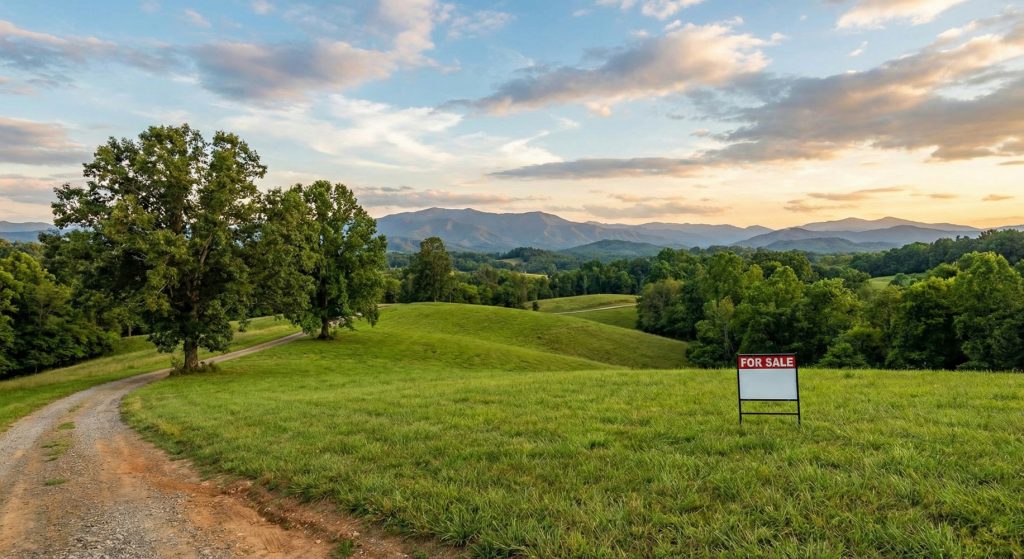
Take a moment to really look at the photo above. What do you see? Some people might just see a field, some trees, and distant mountains. But if you’ve been scrolling through home listings feeling uninspired, or dreaming of escaping the cramped suburbs, you probably see something else entirely: Potential. You see the exact spot on that rise where a wrap-around porch belongs—the perfect vantage point for morning coffee while watching the mist rise off the Great Smoky Mountains. You see a winding driveway leading to a home that was designed specifically for your lifestyle, not someone else’s. You see room to breathe, room to grow, and a legacy to build. This is the allure of Tennessee land. Why Tennessee is Calling There is a reason Tennessee is one of the top destinations in the country for people looking to relocate and build. It’s not just about the breathtaking scenery—though having vistas like the one pictured above in your backyard is a major selling point. Tennessee offers a unique combination of benefits for landowners and custom home builders: The Blank Canvas Advantage Buying an existing home is always a compromise. You’re buying someone else’s floor plan, someone else’s design choices, and often, someone else’s deferred maintenance. When you buy land, you are securing a blank canvas. Building from the ground up allows you to prioritize what matters most to you. Do you want a massive chef’s kitchen? A detached workshop? A home orientated perfectly to capture passive solar energy? When you start with the dirt, the choices are yours. Navigating the Search (Why You Need an Expert) While the dream looks like the picture above, the reality of buying raw land requires due diligence. It’s not as simple as finding a pretty spot and starting to dig. Scenes like the one pictured here are beautiful, but you need to ask the hard questions before you buy. Is there access to public water, or will you need a well? has the land had a “perc test” to ensure it can support a septic system? Are there deed restrictions or zoning laws that might prevent you from building that barn or guest house you want? This is where I come in. Finding land is easy. Finding buildable land that meets your vision and budget requires local expertise. I help my clients navigate topography, utility access, and zoning to ensure their dream doesn’t turn into a headache. Are you ready to stop looking at pictures of paradise and start owning a piece of it? If you are considering buying land in Tennessee to build your future home, contact me today. Let’s turn that “For Sale” sign into “Sold.”
The 2026 Real Estate “Thaw”: Why TN Buyers Finally Have the Edge
The “Great Stay” is over. For the past few years, the Tennessee housing market felt frozen. Homeowners didn’t want to give up their low interest rates, and buyers were left fighting over a handful of houses. That just changed. In 2026, we are seeing a 9–10% increase in active listings across Tennessee. This “thaw” is shifting the power back into your hands. Here is why this is the best news for buyers in years. 1. The “Lock-In” Effect is Fading For years, homeowners stayed put to keep their 3% mortgage rates. But life doesn’t stop. People are finally moving for new jobs, growing families, or to start that Tennessee homestead they’ve always wanted. This pent-up supply is finally hitting the market. 2. You Have Time to Breathe Remember when houses sold in four hours? Those days are gone. With more homes available: 3. Negotiation is Back on the Table When inventory was low, sellers held all the cards. Now, with more competition, buyers have leverage. We are seeing a return of: 4. Better Selection in Our Backyard Whether you are looking in Jamestown, Rickman, or Crossville, the extra inventory means you don’t have to “settle.” You can find the specific floor plan, the right acreage for your animals, or the perfect workshop space without compromising. The Bottom Line The 2026 market isn’t a crash—it’s a reset. It’s a “Goldilocks” window where there is enough inventory for you to have a choice, but enough demand to keep your investment safe. Ready to see what’s available?
The Homebuying Paradox: Why Your First Move Requires a New Set of Rules

You are likely drowning in data but starving for direction. We live in a homebuying paradox: while there is more information available to you than at any point in history, actual clarity has never been rarer. This volume of advice often leads to “analysis paralysis,” keeping capable professionals on the sidelines while they wait for a “perfect” moment that doesn’t exist. This guide is designed to cut through that noise. By synthesizing the core truths from “The First-Time Homebuyer’s Essential Handbook,” we can move past the industry myths and focus on a strategic, human-first approach to ownership. Think of this as your framework for making a confident, calculated leap into the market. The “First-Timer” Label is Wider Than You Think You might be a first-time buyer without even realizing it. One of the most common mistakes is assuming that if you have ever held a title, you are permanently disqualified from “rookie” benefits. In reality, the definition is surprisingly flexible and often includes individuals who haven’t owned a home for a specific period of time. This isn’t just a matter of semantics; it’s a matter of capital. Reclaiming your status as a first-time buyer can open doors to specific grants, tax benefits, and specialized loan programs. Before you assume you’re “just another buyer,” verify your status—it could significantly change your financial leverage. Forget the 20% Rule—It’s Holding You Back The “20% down” requirement is a relic of a different era, yet it remains one of the most persistent myths in real estate. Today’s lending landscape offers a variety of paths for those with smaller liquid reserves, including FHA, VA, USDA, and conventional options. Waiting years to hit a 20% benchmark can actually be a strategic disadvantage in a rising market. If home prices are appreciating faster than you can save, you are essentially chasing a moving target. By entering the market sooner with a lower down payment, you begin building equity and benefit from long-term stability rather than watching the market move away from you. “Waiting for a 20% down payment is not always necessary or smart. In many cases, entering the market sooner with a smaller down payment allows you to start building equity and gain long-term stability earlier.” Why the Bank’s “Yes” is Often Too Much One of the most dangerous mistakes you can make is treating your lender’s maximum approval as your personal budget. Lenders use rigid debt-to-income formulas that account for your gross pay, but they don’t see your lifestyle, your travel goals, or your “sleep-at-night” factor. Blindly following the bank’s lead is the fastest way to become “house poor.” You need to understand the gap between what a bank says you can borrow and what you should spend. Being house poor means your mortgage consumes so much of your take-home pay that you lack the funds for maintenance, emergencies, or life’s enjoyments. True affordability is about your personal comfort level, not a mathematical ceiling. Your Credit Score is a GPA, Not a Life Sentence Think of your credit score like a GPA for your financial history. It provides a snapshot of how you’ve handled debt in the past, but it is a living number, not a permanent mark of your character. While “ideal” scores unlock the lowest rates, “minimum” scores are often much more accessible than people realize. Don’t let the fear of a non-perfect score stop you from starting the process. Credit improvement is a timeline, not an event, and many buyers make significant progress while they are actively searching for a home. Focus on the big levers—payment history and utilization—and remember that you don’t need a perfect 4.0 to get into the house you want. Closing Costs: The Final Boss You Didn’t See Coming If the down payment is the hurdle everyone sees, closing costs are the hidden challenge waiting at the finish line. These administrative, legal, and tax fees are often the biggest surprise for buyers because they require additional liquid cash on top of the money you’ve already set aside. A common mistake is forgetting to account for these, which can lead to a last-minute scramble for funds. The good news is that these costs aren’t always your burden alone. Depending on the market and your loan strategy, you can mitigate these expenses through seller credits—where the seller agrees to pay a portion of your costs—or specific loan structures that help manage the upfront hit. Always ask your strategist how to minimize your “cash-to-close” requirements. When the Deal Gets Messy, the Negotiating Starts The period between an accepted offer and the final closing is where most buyers feel the most stress, particularly during inspections and appraisals. However, an expert strategist sees these hurdles as opportunities to refine the deal rather than reasons to walk away. Why the “Keys” Don’t Always Feel Like a Win (At First) The journey to ownership is an emotional rollercoaster, and the first month in a new home is often the most taxing. It is completely normal to feel a sense of buyer’s remorse or stress as you navigate maintenance realities and a new budget. This is the “emotional side” of the investment that few people talk about. The rewarding feeling of homeownership rarely happens the moment the keys are placed in your hand. Confidence and satisfaction are gradual; they grow as you settle into the rhythm of your new space and realize you have successfully navigated a complex system. Be patient with yourself during the transition. A New Perspective on the Path Home Buying a home is not a binary “pass/fail” test; it is a complex learning process that requires a shift in mindset. By reframing your status, letting go of outdated myths, and prioritizing personal affordability over bank approval, you change the nature of the journey. The path home is rarely a straight line, but with a strategic framework, it is one you can walk with total clarity. As you reflect on your own readiness, ask yourself: Is the fear holding me back based
The Ultimate Guide to Buying a Home Out of State without Losing Your Mind

Moving to a new state is an exciting adventure, but the complexity of buying a house remotely can feel overwhelming. How do you find the perfect neighborhood without driving its streets? How can you trust a property you’ve only seen through a screen? At Team Denehy, we understand this transition better than most. We are local Jamestown, Tennessee agents now, but we are originally from Las Vegas. We’ve personally navigated the cross-country move and the unique “paradox” of buying in a market that is physically far away. The good news is that with the right strategy, buying a home from afar is not only possible but increasingly common. Here is your roadmap to navigating the out-of-state homebuying journey with confidence. 1. Build Your Dream Team on the Ground Your most crucial asset is a team of local experts you can trust to be your eyes and ears. 2. Become a Virtual Neighborhood Detective Before you fall in love with a house, fall in love with the location. You can do a surprising amount of sleuthing from your current home. 3. Master the Art of the High-Definition Virtual Tour Photos in a listing can be staged and edited to hide flaws. To get a true feel for a home, you need a transparent, high-quality look at the property. 4. Plan a Strategic Visit (If Possible) While you can do everything remotely, a short, targeted trip can be incredibly beneficial once you’ve narrowed down your top contenders. Use this time to: 5. Prepare for a Remote Closing You no longer have to fly across the country just to sign a stack of papers. Buying a home out of state requires a higher level of trust, but with Team Denehy at Mitchell Real Estate, you have partners who have walked in your shoes. Whether you are moving from the West Coast or just a few states over, we are here to make Jamestown feel like home before you even arrive.